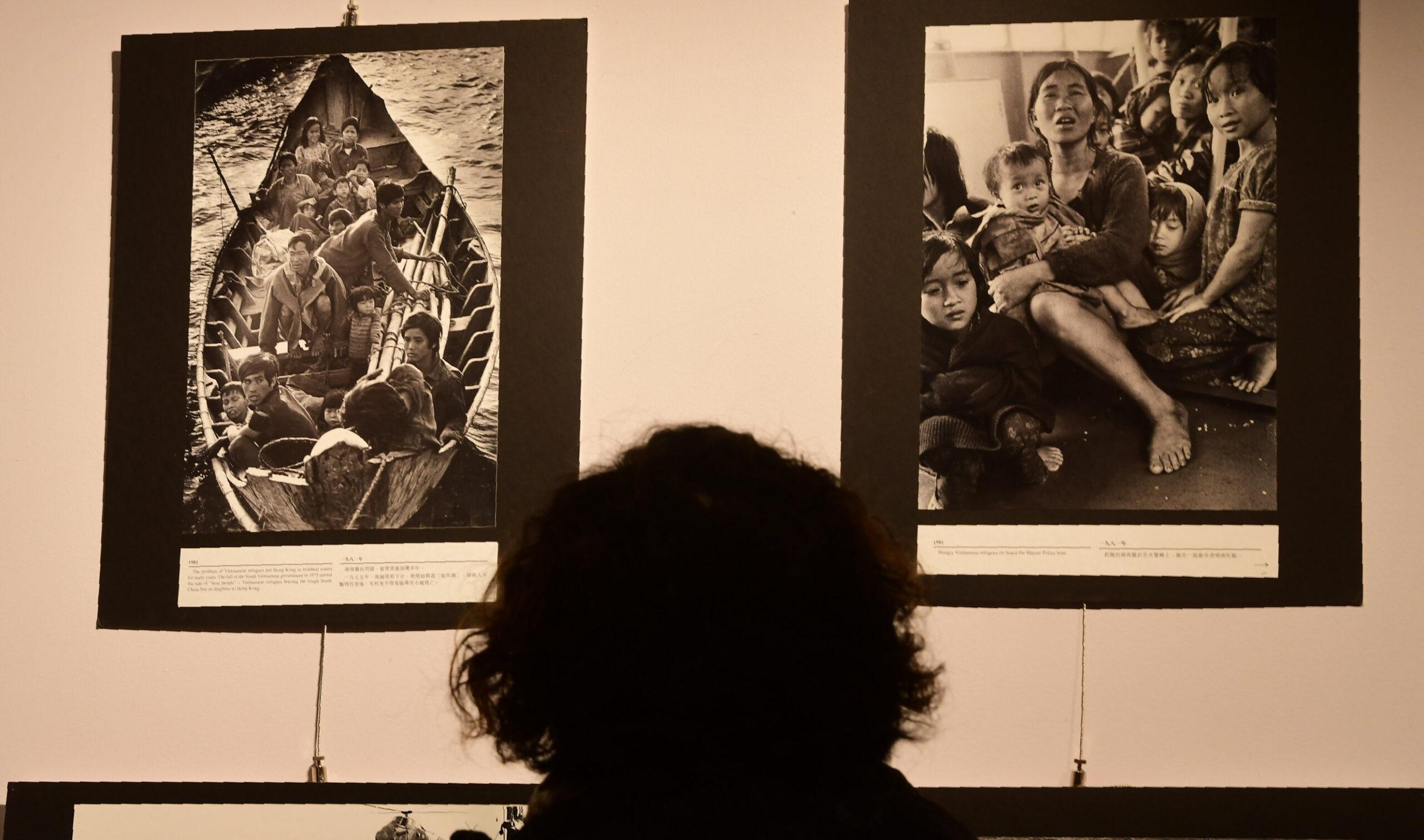
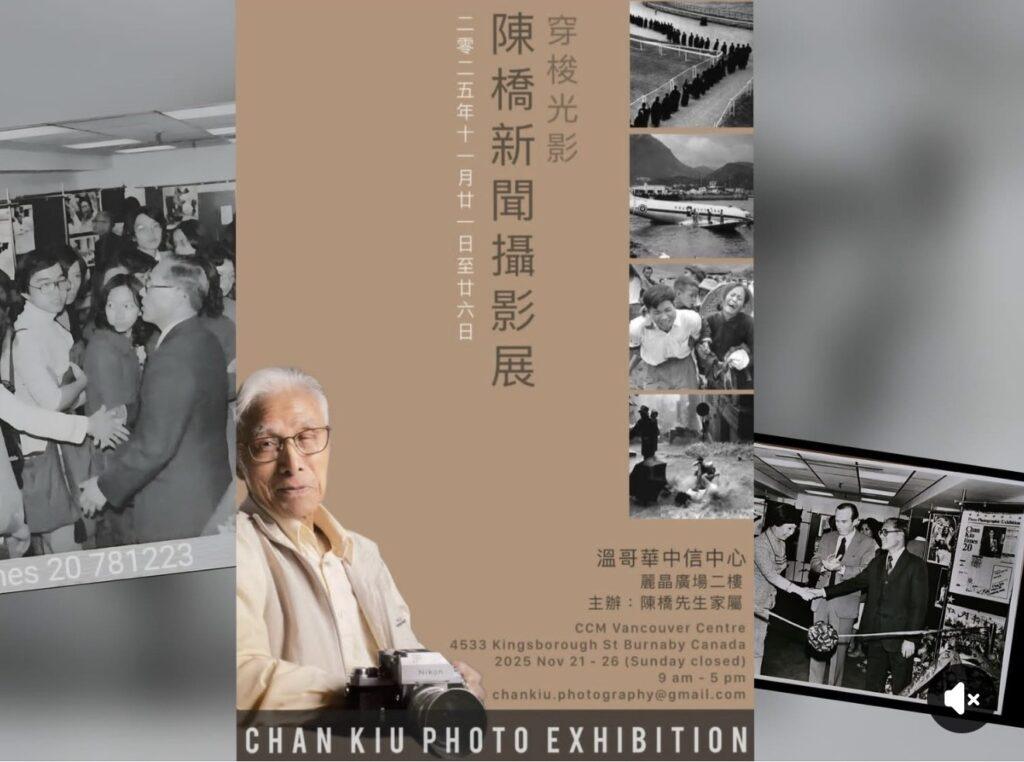
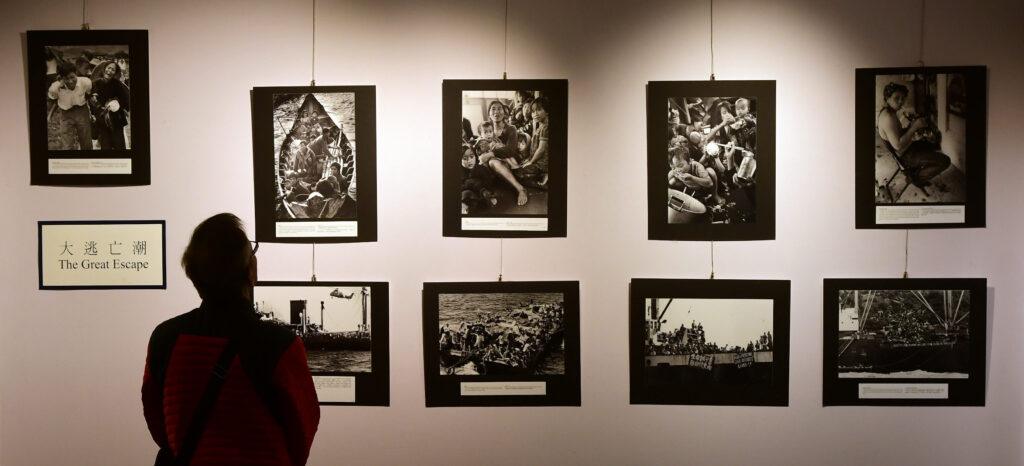
Mr. Chan Kiu — affectionately known in Hong Kong’s press circle as “Uncle Kiu” — a pioneering veteran of Hong Kong news photography, passed away in Vancouver, Canada last year at the age of 96. Recently, his children in Canada held the Chan Kiu Photo Exhibition in Vancouver, showcasing a selection of precious images captured during his lifetime. The exhibition revisited an era of “grand transformation” in Hong Kong, from the 1950s to the 1980s, when the city’s legendary rise astonished the world. Widely regarded as one of Hong Kong’s most iconic figures in photojournalism, Uncle Kiu faithfully documented a city in flux, creating works that served not only as powerful news records but also as enduring testaments to its cultural and historical evolution.
Born in Hong Kong in 1927 to a poor family, Uncle Kiu fled with his parents to his father’s hometown in Dongguan during the Japanese occupation of Hong Kong in the Second World War. After the war, Chan’s family returned to Hong Kong, where he helped his mother sell fish at the market to make ends meet. Yet, he knew early on that fishmongering was not his calling. Through a relative’s introduction, he found a job taking photos for tourists with a wooden box camera at Tiger Balm Garden—a humble opportunity that marked the beginning of his lifelong journey in photography.
In 1956, Uncle Kiu joined The Standard as a darkroom technician. Three years later, he moved to the South China Morning Post, becoming a full-time photojournalist. Over a career spanning more than three decades, he captured many defining moments in Hong Kong’s modern history: the 1962 influx of mainland refugees, the 1967 riots, the arrival of Vietnamese boat people, devastating typhoons and floods, and the Sino-British negotiations, among others.
His body of work was not only vast—reportedly exceeding 40,000 rolls of film—but also rich in depth and historical value. His achievements earned him six Honour Certificates from the World Press Photo organization and the Queen’s Honorary Medal in 1985, recognizing his outstanding contributions to journalism and historical documentation.
Uncle Kiu retired in 1987 in Hong Kong and immigrated to Canada in 1993. He passed away in Vancouver on April 6, 2024.
Like Uncle Kiu, I myself entered the industry in 1989 also as a darkroom technician at The Express News, and later became a photojournalist. Though I eventually switched to writing, my interest in news photography has never faded, and I’ve remained close friends with many photographers. When I started out, Uncle Kiu had already retired. I remember meeting him once at an industry gathering — a brief encounter that left a quiet impression. Yet, as I viewed his photos at the Vancouver exhibition this time, his warm smile and familiar presence vividly came back to mind.
港燦在溫哥華之五 雨
溫哥華由深秋過渡到初冬的標誌,不是氣溫計上驟降的數字,而是一場來了便彷彿不再打算離開的雨。
它不像夏季的雨,來得暴烈,去得也乾脆;溫哥華初冬的雨,是一種彌漫在每一立方空氣裡的無所不在。它是矜持的,細如牛毛,隨風飄灑,將遠山近樹暈染成一片水墨的灰濛。空氣也似乎吸飽了水份,沉甸甸的,帶著腐殖土與濕透的松針那清冽而微涼的氣息。
街道上,柏油路面的顏色變得深沉,像吸墨的宣紙,將天光雲影都收納進去,映出兩旁建築與樹木朦朧的、流動的倒影。
不到下午五時,夜幕已提早垂落,城市的燈火逐一亮起,雨便顯露出它最為魅惑的容顏。那些紅的、黃的、白的燈光,全被雨水濡濕、拉長、打散,在平滑如鏡的積水窪裡,流淌成一片片破碎而璀璨的星河。車燈劃過,便在這星河裡犁出一道道轉瞬即逝的金色波痕。
此時的溫哥華,褪去了晴日下的明媚與張揚,像一個卸了妝的倦美人,顯露出幾分清寂,幾分疏離,卻又在這無邊的濕潤裡,滋長出一種內向的、沉思的溫情。
傘,成了人們手臂的延伸。步伐不再悠閒,多了些許目的明確的匆促。
巴士車窗玻璃上,總蒙著一層薄薄的水氣,將車廂內溫暖的燈光與人影,暈染成印象派的畫作。餐館的生意似乎也好了起來,隔窗望去,氤氳著白霧,人影幢幢,成了濕冷世界裡一個個誘人的、溫暖的標點。雨水敲打屋頂的沙沙聲,成了白日最恆定的背景音;到了夜裡,則化作催人入眠的、單調而安詳的搖籃曲。
在這彷彿無休止的濕潤包裹中,生命並未褪色,只是換了一種更為沉潛的方式。微風把紅透的楓葉都摘了下了,在地面鋪上了一層厚厚的地毯,細雨再給其加上一抹亮澤。草地依舊是執拗的綠,松針葉被雨水洗刷,綠得幾乎要滴下汁來。城市角落裡,耐寒的山茶已然鼓出飽滿的花苞,在雨中靜靜等待綻放的時機。
雨,固然濡濕了衣襪,拖慢了行程,卻也彷彿將時間的流速調緩了。它將天地籠進一個透明的水晶罩裡,隔絕了喧囂教人不得不向內審視,與自己的思緒相處。於是,這雨季的溫哥華,成了一座巨大的、流動的禪院。它在窗外淅淅瀝瀝的低語裡,供養著一種潮潤的靜謐,與一種在灰度中辨認細微光影的、安寧的敏感。
另:今日是母親85歲生日,僅以此文祝母親大人健康長壽。
Leave a Reply